Idelcoop
Web Development — 2026
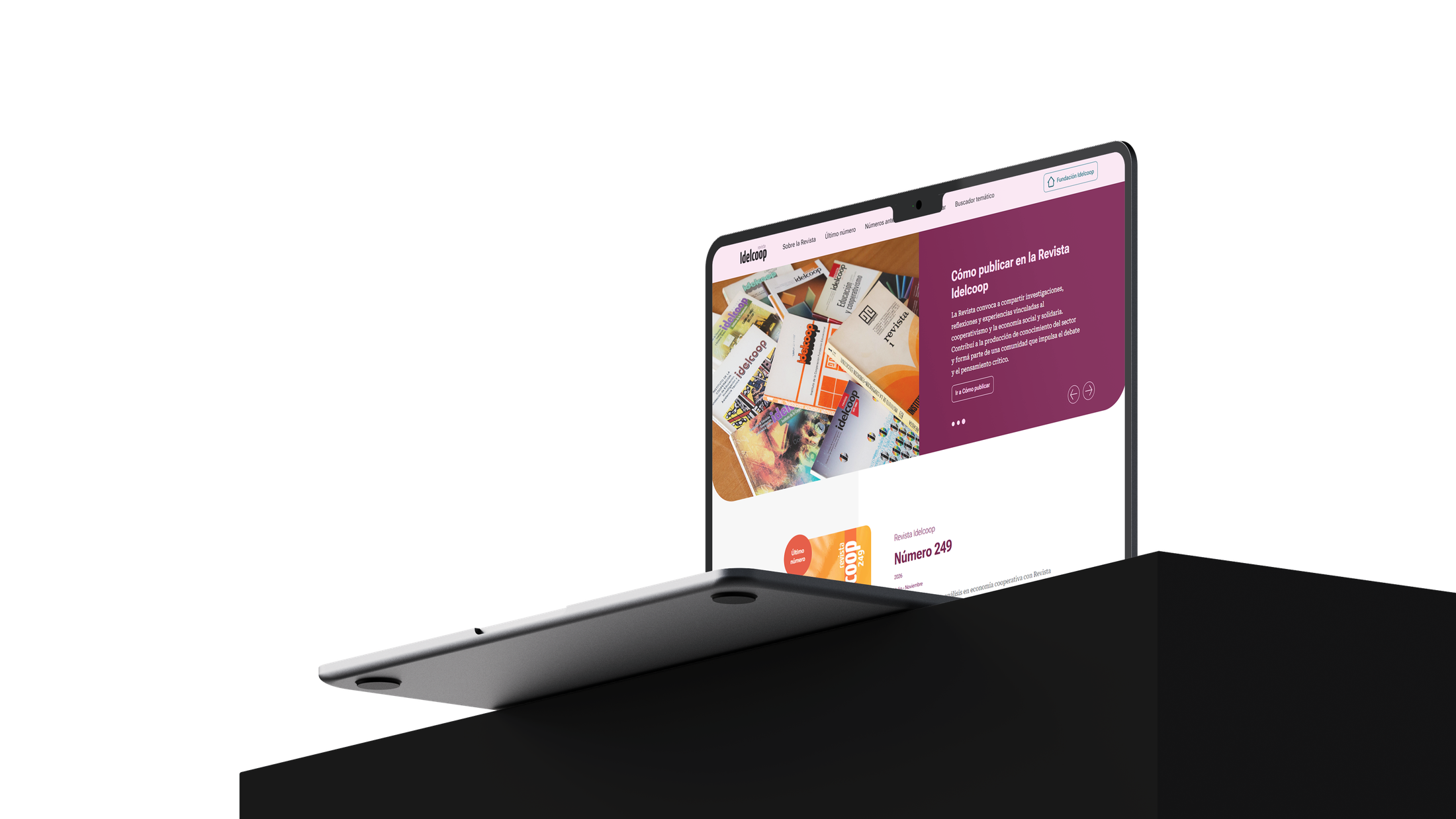
Full development of Idelcoop's new WordPress site, migrated from Drupal 7, as part of the redesign led by El Maizal, the agency where I'm a partner.
View site → (opens in a new tab)Context
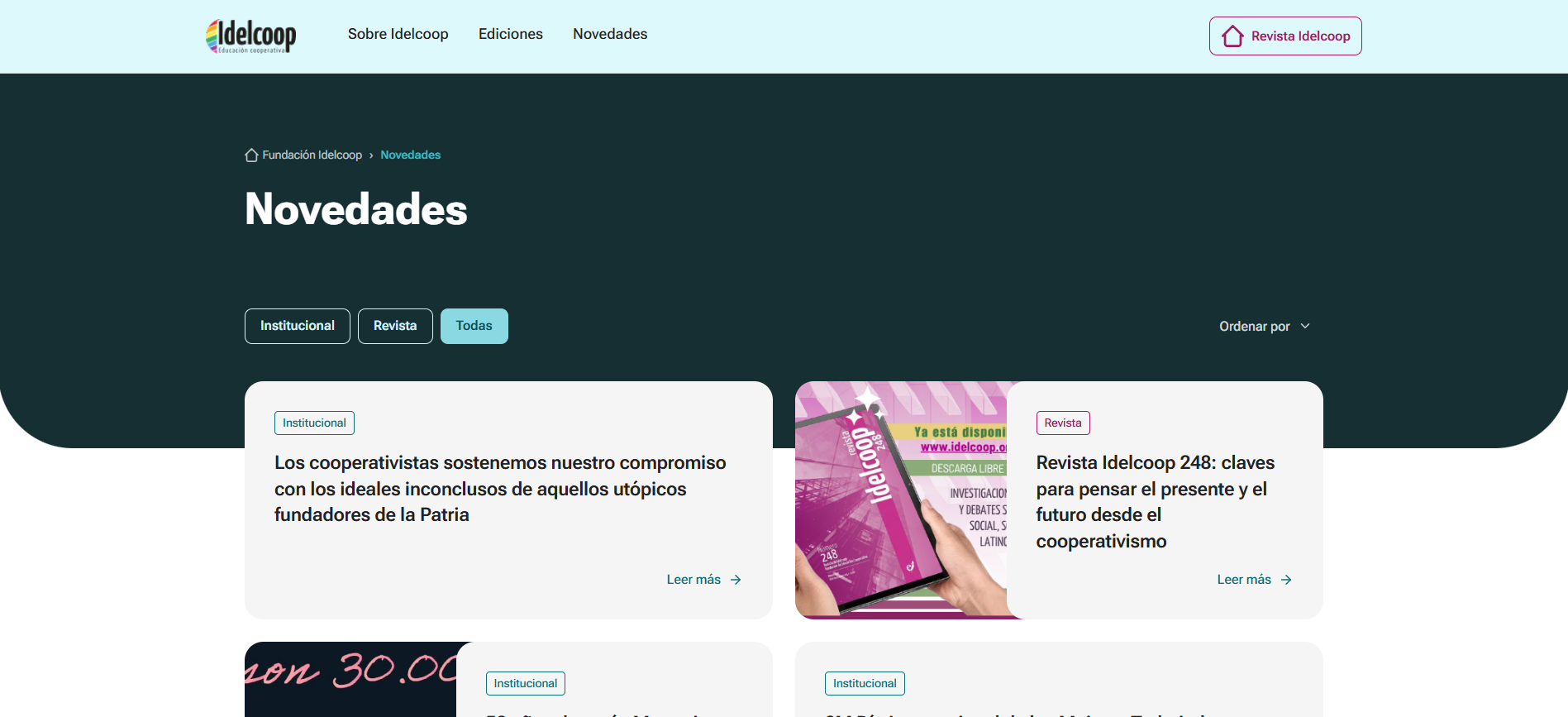
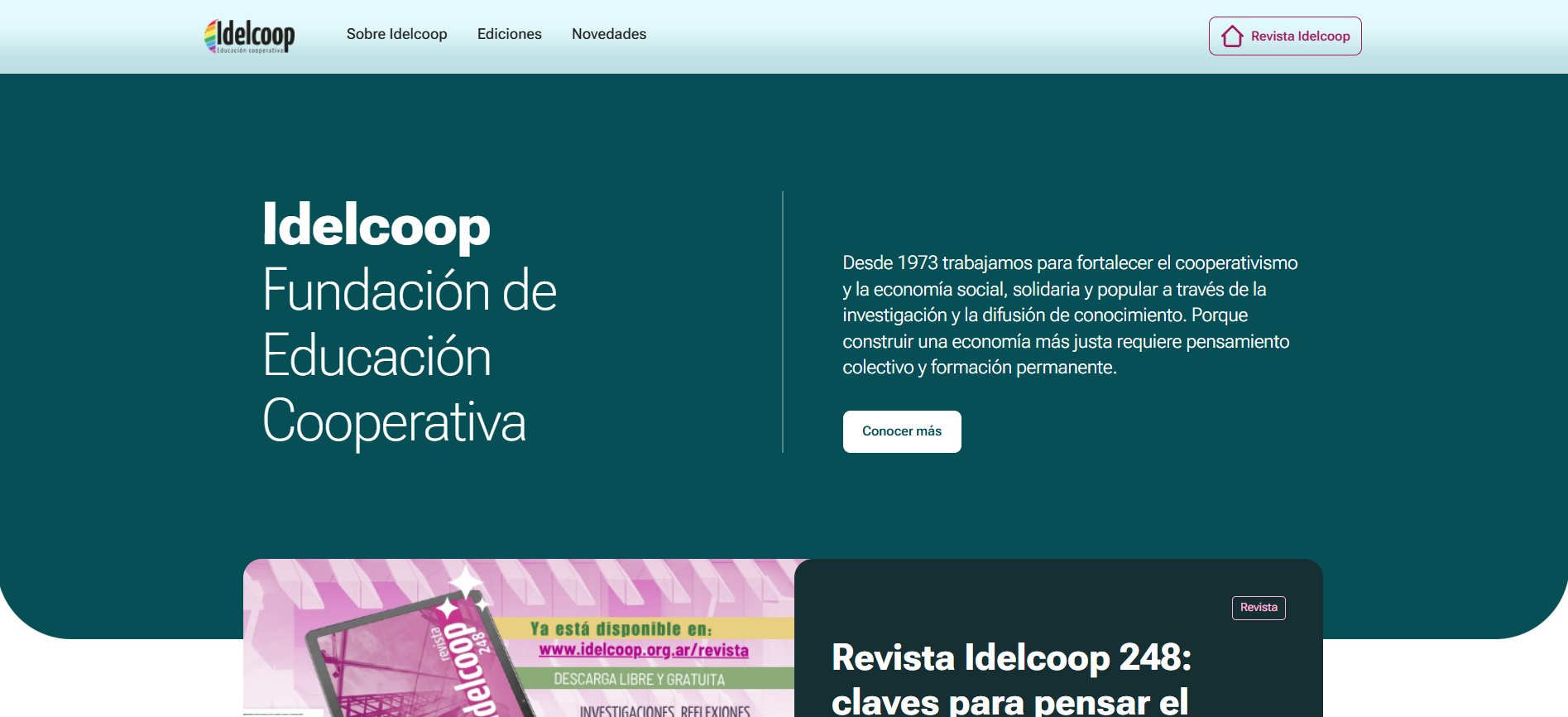
Idelcoop is a cooperative foundation that publishes Revista Idelcoop, with 50 years of history, 248 issues and over 2,500 published articles. The site ran on Drupal 7, a platform more than a decade old with no active maintenance. Idelcoop needed to update the site to make it more accessible and intuitive, and bring it up to the technical standard required by Latindex 2.0, the reference catalog for academic journals.
The challenge
A technical audit revealed the scale of the problem: 98.7% of pages missing an H1 tag, 78.9% missing a meta description, 2,789 groups of duplicate titles, over 37,000 images with no alt text, no sitemap.xml, and an active database error. On top of that, navigation was unintuitive, with a bare-bones academic-journal design that didn't invite exploration of the historical archive.
My role
I was in charge of the site's full WordPress development: architecture, content migration and the technical implementation needed to meet academic indexing standards. UX/UI redesign was led by Catalina García Laval, and overall coordination and content by Agustina Silombra.
What I built
- Custom WordPress theme: built from scratch for the specific needs of an academic journal, with no dependency on page builders.
- Content architecture: Custom Post Types for articles, issues and authors, with its own taxonomy by subject area and meta-boxes built without relying on plugins like ACF.
- Data migration: 2,800 Drupal nodes, 2,510 articles and 248 magazine issues, with clean, persistent URLs.
- Academic metadata: Dublin Core on every article (15+ tags), Schema.org (JSON-LD, ScholarlyArticle type) with DOI, ISSN and license, and a sitemap segmented by content type.
- Institutional integration: at Idelcoop's request, I built a custom OAI-PMH 2.0 endpoint so CLACSO can index the magazine in its Virtual Library, tested against all six protocol verbs across the 2,510 articles.
- Baseline technical SEO: a single H1 per page, meta descriptions, a working RSS feed and an automatic sitemap.
- Self-management: a guide and hands-on training so the editorial team can publish new issues without depending on an outside developer.
- No plugins: all custom development (CPTs, taxonomies, metadata, OAI-PMH) was built entirely from scratch, with no third-party dependencies.
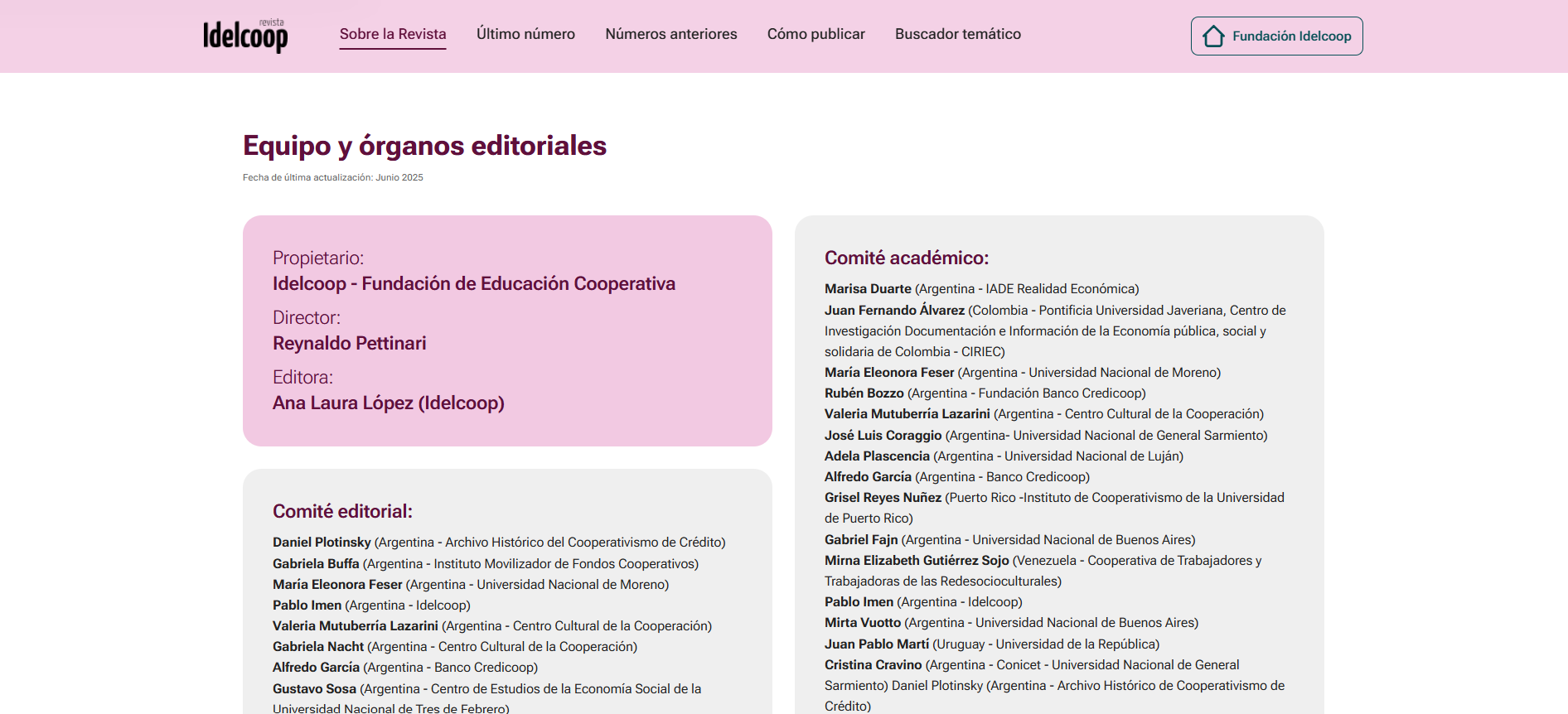
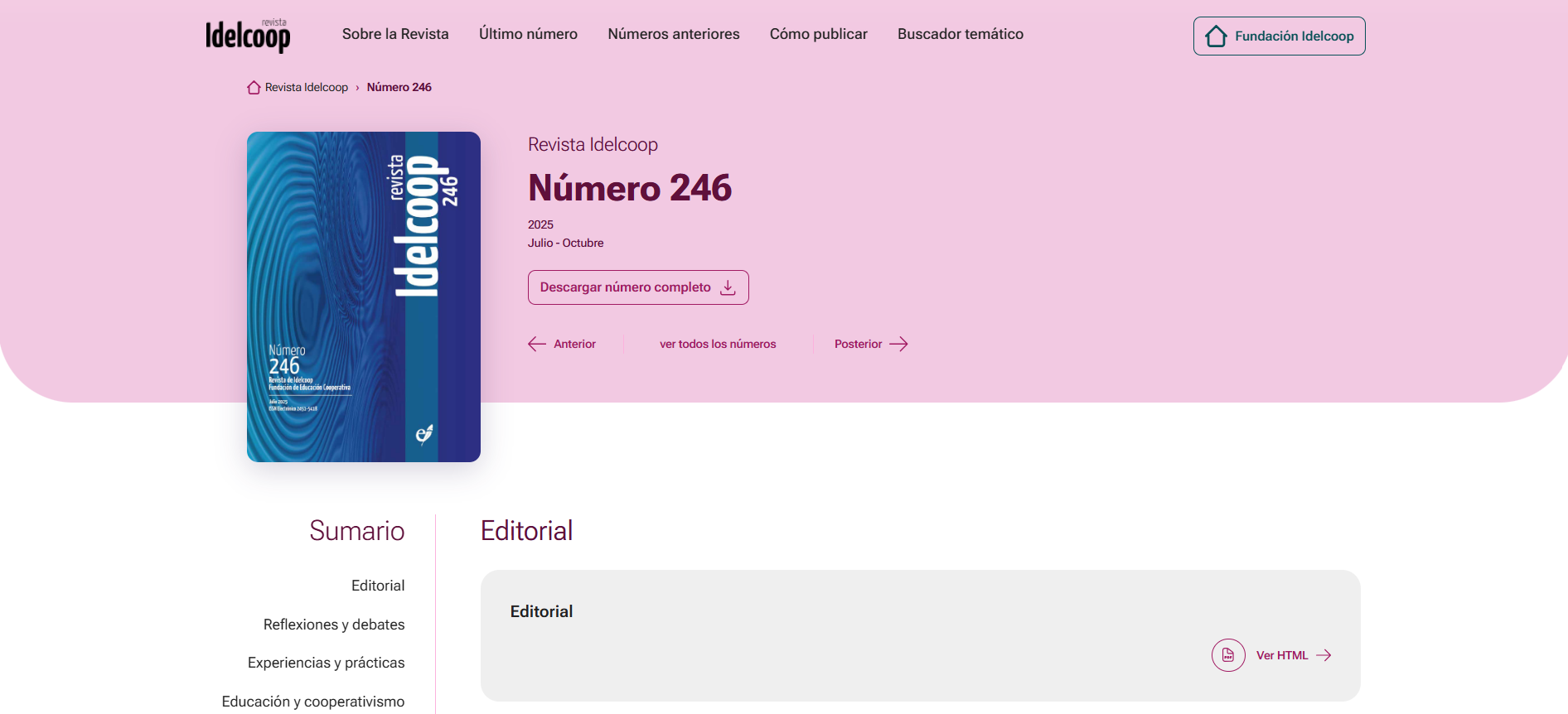
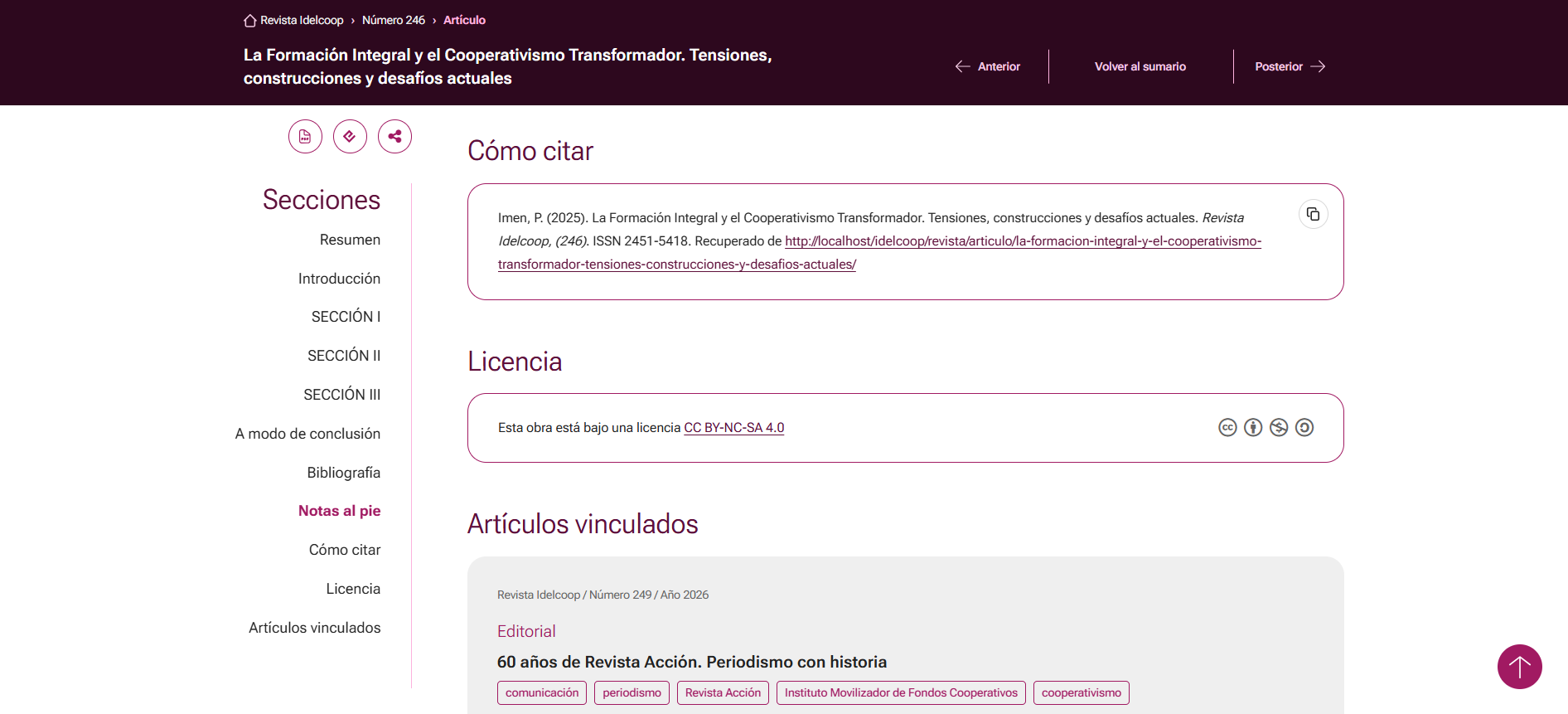
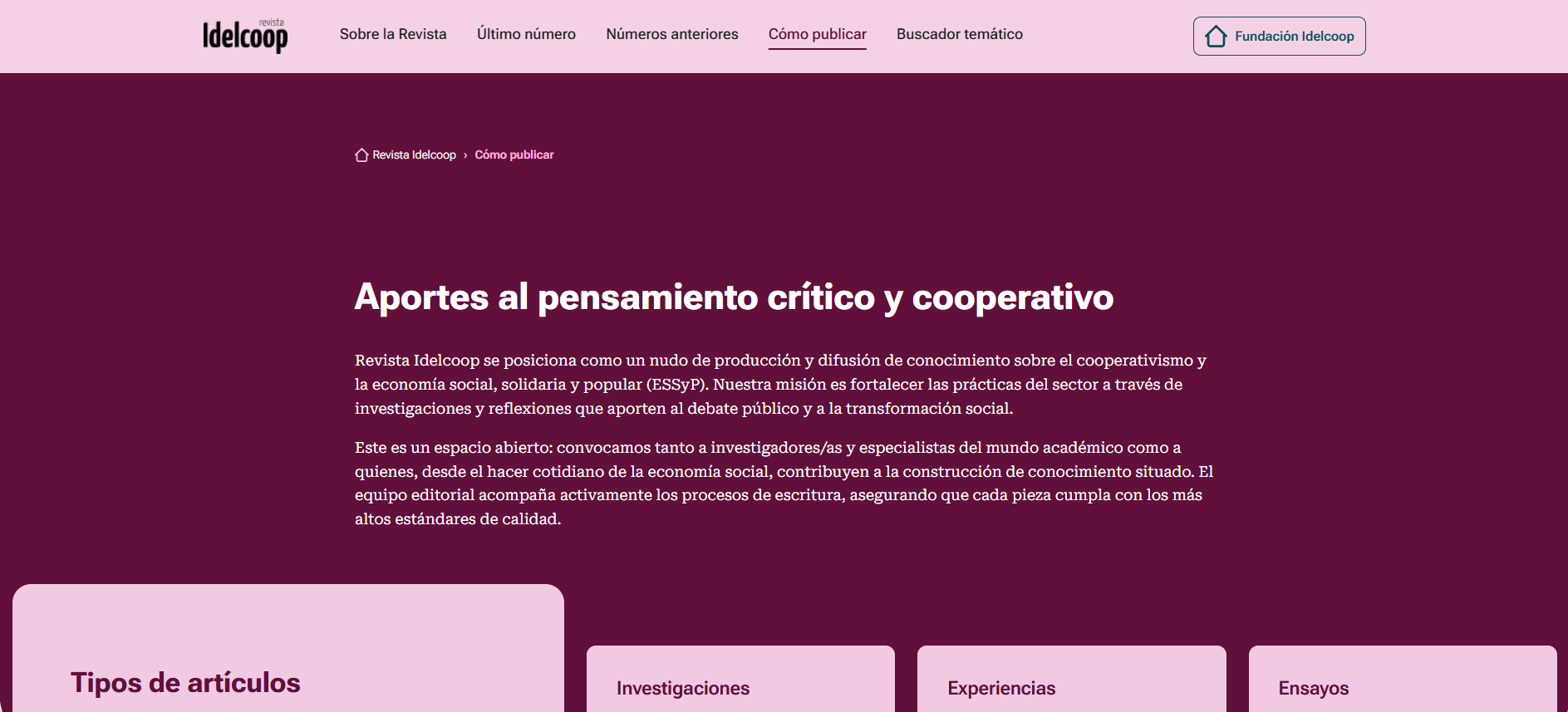
Result
Development is finished and tested on staging, awaiting launch on the final domain. A technical audit against the Latindex 2.0 standard (38 items evaluated) confirms the site already meets all 7 mandatory basic characteristics and 21 of the remaining 31, with most of what's left being data entry rather than development. Once it's live, I'll repeat the Analytics and SEO measurement to compare against this baseline.
Credits
Agustina Silombra — Project management and content
Catalina García Laval — UX/UI design
Marisol Garaycoechea — Web development
Have a project that needs this same attention to detail?